How I Plan a 3-Day Astrophotography Trip (A Moab Example)
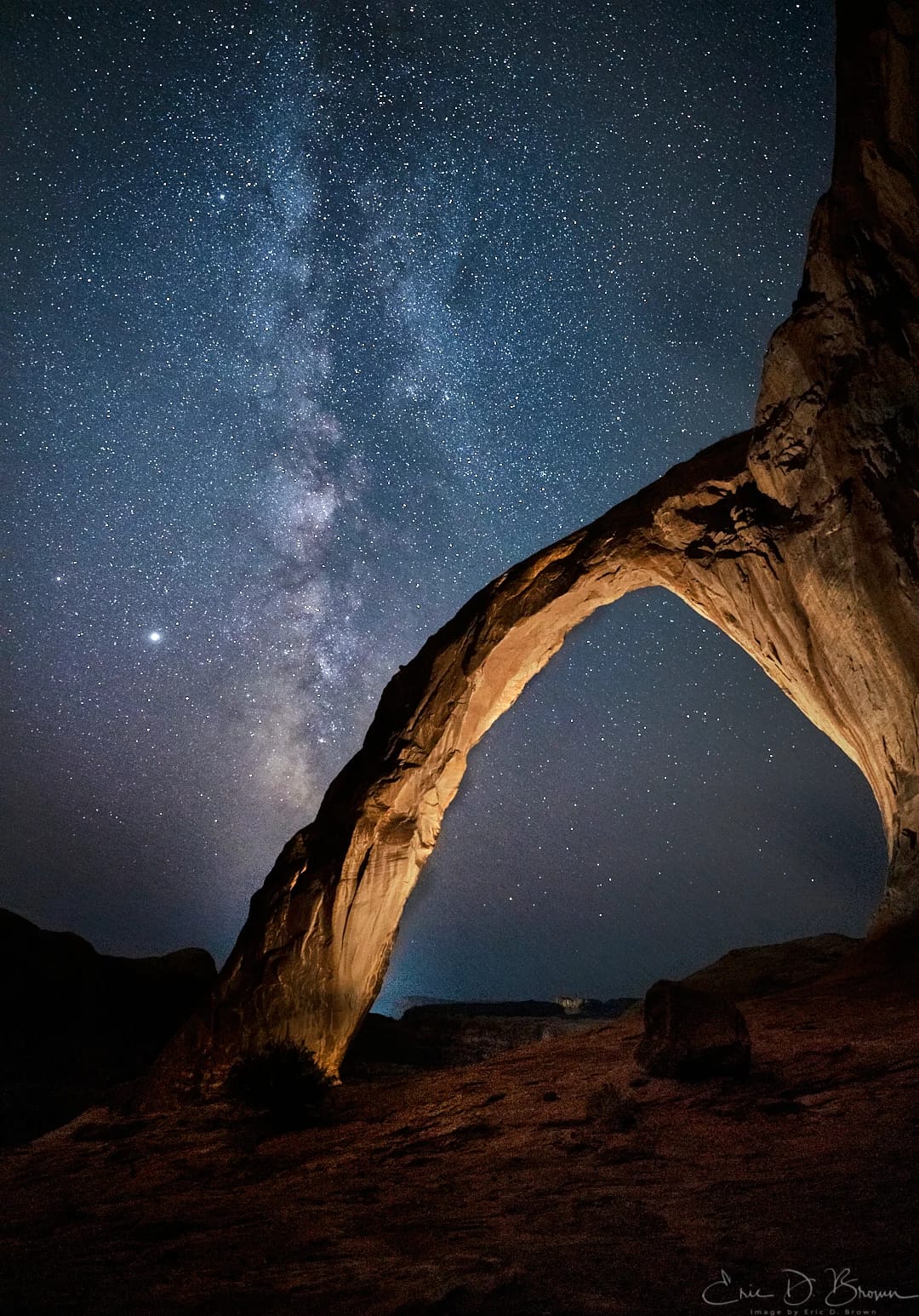
Moon phase first. Galactic core timing second. Foreground third. Weather last, because weather doesn't negotiate. A full walkthrough of how I'd plan a 3-day astrophotography trip to Moab in May.
You can just go. Throw your camera gear in the car, drive out to a dark spot, point the camera at the sky, and see what happens. Sometimes that works. More often, you come home wishing you'd picked a different weekend, a different spot, or had any idea where the Milky Way was actually going to be at midnight.
Good astrophotography trip planning isn't complicated. But there is a sequence to it. This post walks through how I'd build a 3-day astrophotography trip to Moab in May, from the first decision to the last detail you can actually control.
Start with the Moon
The moon is the biggest variable you can lock down months in advance. It's also the one most people don't check until they're already booking hotels.
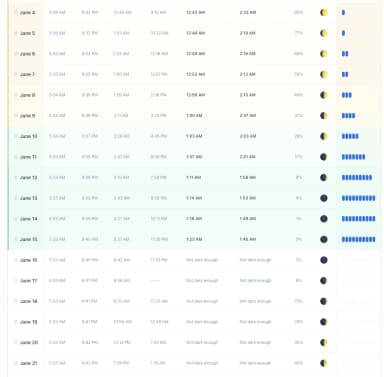
A full moon or near-full moon washes out the Milky Way entirely. In practical terms, that means you're planning around the new moon window, roughly five to seven days on either side of the new moon when the sky is dark enough to shoot.
In May, that window falls around late in the month. Before I book anything (accommodation, time off work, nothing), I find the new moon date and work backward. Everything else fits around that date.
This is the first thing I use milkywayplanner.com for. Pull up the calendar view, find the new moon window for your target month, and those become your candidate dates. If you can only go one weekend in May, make sure it's that one.
How Do I Know When the Galactic Core Will Be Up?
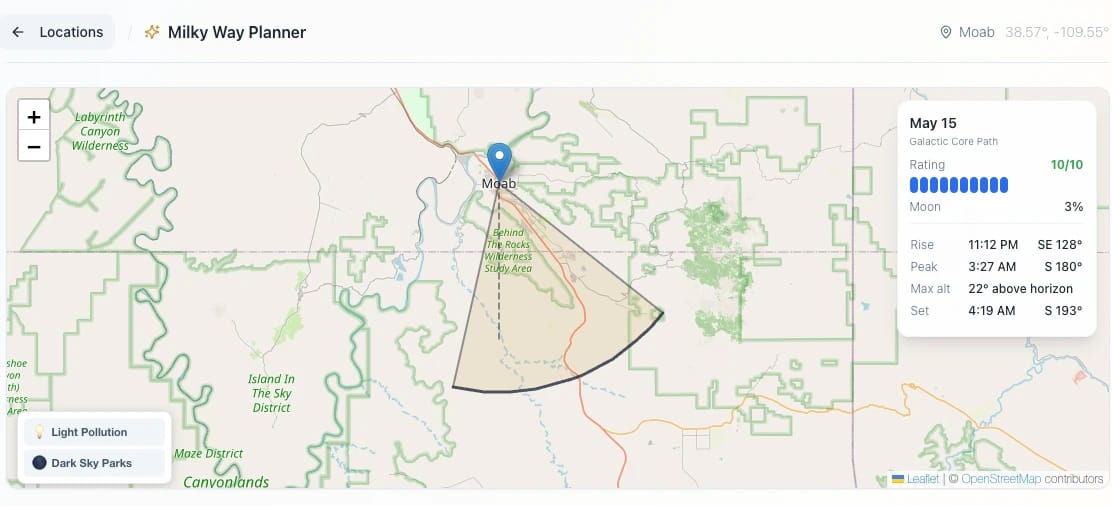
May is good for the galactic core from Moab. But "it's Milky Way season" isn't enough information to plan a shoot around. You need to know when the core rises on your specific nights, how high it gets, and roughly where it'll be in the sky relative to your foreground.
In early May from Moab (about 38°N latitude), the galactic core rises in the southeast a couple hours after dark, low on the horizon. By late May it's getting up earlier and reaching more workable altitudes by midnight or 1am. If you're planning around that late-May new moon window, you're in decent shape. The core will be reasonably positioned during your prime shooting hours.
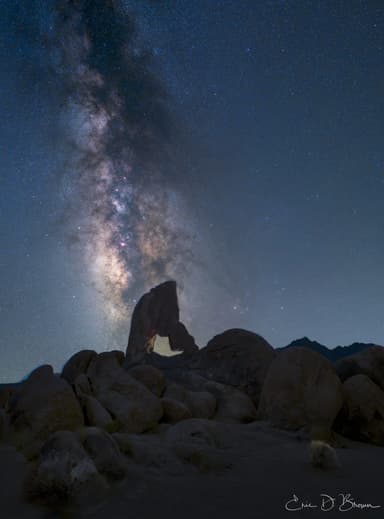
The reason this matters: you can't just show up and spin around until you find the Milky Way. If your foreground is a rock arch that faces northwest and the core is rising in the southeast, you have a problem. You need to know where the core will be at 11pm, midnight, and 2am on your target nights before you commit to a location.
MWP's planner shows you the galactic core arc for any location on any date. Spend fifteen minutes on this before you book anything. It changes which locations make the shortlist.
Pick Your Foreground, Then Match It to the Sky
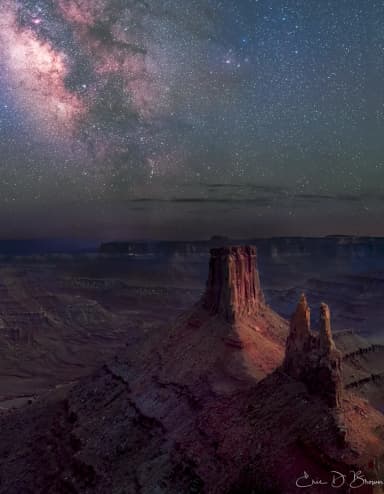
Moab has a lot of options for Milky Way photography. Mesa Arch, Dead Horse Point, Fisher Towers, the Windows area in Arches, the La Sal Mountains to the east. Each one has a different orientation, different distance from town, and different relationship with the light pollution coming off Moab's main strip.
You want the location that, on these specific nights, with the core rising where it's going to be, gives you a foreground that actually works with the sky. That's a different question than "which spot looks cool."
Mesa Arch faces roughly east, which lines up well with the core's position in early-to-mid summer nights. Dead Horse Point has a wider view and sits inside a designated Dark Sky Park, which means better skies. Fisher Towers gives you dramatic foreground rock formations but needs the core high enough to clear them.
I'll typically use a combination of tools here: milkywayplanner.com for the core timing, PhotoPills for visualizing exactly where the core will be relative to a specific foreground at a specific time. You're trying to build a mental picture of the scene before you're standing in it at midnight.
If you can do a daytime scout, do it. Walk around, look at what's behind you, check your sightlines. A location that looks perfect in photos can have a cell tower or a lit parking lot right in your frame when you're actually there.
What Does the Light Pollution Actually Look Like in Moab?
Moab isn't a dark sky paradise. The town itself throws some glow, and depending on where you set up, you'll see some orangey horizon wash. By the Bortle scale, most of the prime shooting spots around Moab fall in the 3 to 4 range, with darker areas pushing toward 3 and spots closer to town trending toward 4 or 5. You can verify the Bortle rating for any spot on the light pollution map.
That's workable. You don't need Bortle 1 skies to come home with a photo you're happy with. Bortle 4 is what a lot of people shoot in. What matters is knowing what you're dealing with so your expectations are right and you're not chasing a level of sky darkness you're not going to find there.
Dead Horse Point State Park, which sits on the canyon rim west of Moab, is a certified International Dark Sky Park. The skies there are noticeably better than in the canyon bottoms. If sky darkness is a priority on this trip, that's worth factoring into where you spend your nights.
Weather: Plan Everything, Accept This One
Weather is the variable you can't control, and for a trip you're booking six or eight weeks out, the forecast is mostly noise. You can look at historical patterns (May in Moab is generally dry, afternoon thunderstorms build in summer but May usually stays clear), but that's all you've got that far out.
What I do is plan everything else tightly: the moon, the core timing, the locations. About a week before the trip, I check the forecast on Clear Outside, which gives transparency and seeing data alongside cloud cover. If one of my three nights looks worse than the others, I shift my primary shooting plans to the better nights. If all three nights look bad, I go anyway. Forecasts are wrong, skies clear after a storm, and you learn more from one night in the field than from all the planning in the world.
The planning puts you in position. It doesn't guarantee a clear sky.
What the Actual Plan Looks Like
So for a late-May Moab astrophotography trip built around the new moon window, here's roughly what I'd have locked in before I leave:
- Nights: Three nights centered on the new moon, picked from milkywayplanner.com's calendar
- Primary location: Dead Horse Point for at least one night (better sky, wide open view of the canyon)
- Secondary location: Mesa Arch or the Windows section for a second night, where the arch frames up well with the core's position
- Third night: Flexible: revisit the best location from nights 1 and 2, or drive toward Fisher Towers if conditions warrant
- Core timing: Checked for each location and night. I know when the core rises, when it gets to a shootable altitude, and roughly what direction to face
- Weather check: One week out, then day-before
That's it. Most of the scrambling that happens the day before a trip (or the day of) is stuff you could have settled in thirty minutes a few weeks out.
If you're putting a multi-night trip together, the Trip Planner on milkywayplanner.com is a good place to pull all of this into one view: locations, dates, core timing. It's easier to see conflicts and gaps there than in your head or a notes app.
And when you show up and the sky actually cooperates, you want to be standing in front of something worth shooting. That's really the only thing the planning guarantees.