Milky Way Focus Techniques: How to Get Sharp Stars Every Time
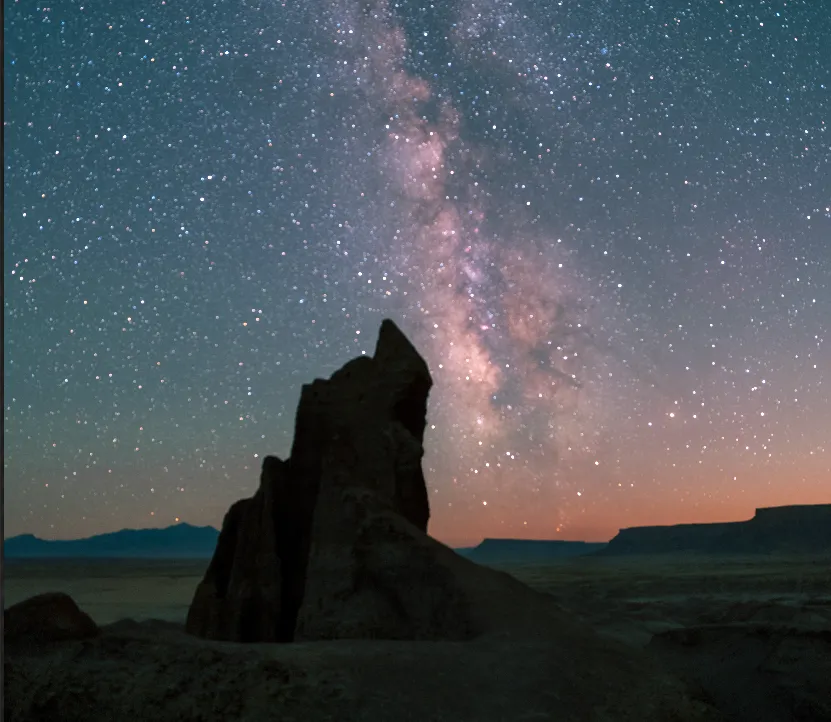
Soft stars are the single most common reason Milky Way shots fail. Here's how to choose the right focus technique for what you're shooting, and how to build it into your planning.
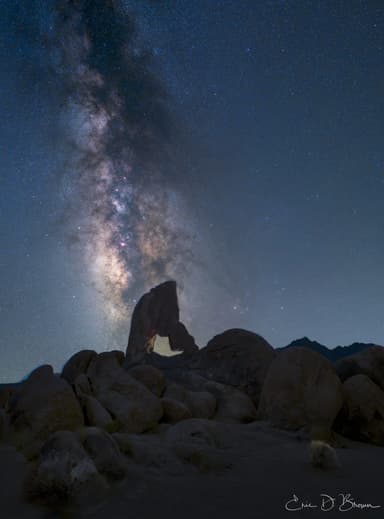
I've come home with soft stars more times than I want to admit. The photo above is a good example of what that looks like. Conditions were right, composition was there, the Milky Way showed up exactly when it was supposed to, but the photos were still unusable because I hadn't nailed focus.
Focus kills more Milky Way shots than most people expect, and it's genuinely harder to get right in the dark than it sounds. Autofocus won't help you here, so you need to get good at finding it and keeping it. The complete step-by-step guide covers the mechanics in detail. This post is about the judgment calls: which technique to use when, and how to build it into your planning.
The Live View Zoom Method
This is my go-to technique. Use your camera's live view screen to zoom in on a bright star and manually adjust focus until it's as small and sharp as possible.
Crank your ISO to 6400 or 10000 (don't worry, this is just for focusing) and set aperture wide open. Find the brightest star you can see on the LCD. Zoom in using your camera's magnification, usually 5x or 10x. Turn the focus ring slowly and watch the star shrink from a fuzzy blob to a sharp point. On most cameras you can watch this happen in real time during the exposure.
The key is finding a bright star to work with: something at magnitude 2 or brighter. During summer months, Vega, Altair, or Deneb work well. If you're shooting the galactic core, Sagittarius and Scorpius have plenty to choose from.
Once you've got focus, take a test shot (or 3) and see how things look. Repeat as needed.
Hyperfocal Distance
Hyperfocal distance is the closest point you can focus on while keeping objects at infinity acceptably sharp. For Milky Way photography, that usually means everything from about 15-30 feet to infinity will be in focus, depending on your focal length and aperture.
This works well when you have foreground elements you want sharp, like a rock formation silhouetted against the sky. Calculate hyperfocal distance using an app like PhotoPills, then use your lens's distance markings to set focus to that distance.
The challenge is that many modern lenses don't have reliable distance markings, especially zooms, and reading them in the dark is awkward even when they're there.
When it works, hyperfocal focusing is faster than the live view method, particularly if you're shooting multiple compositions from the same location (time-lapses, panoramas) where you need consistent focus across frames.
One caveat: hyperfocal distance calculations accept some softness at the edges of the depth of field. For critical sharpness on the stars themselves, focusing at infinity usually gives better results.
The Infinity Preset
This is the technique I wish I'd learned earlier. Set your lens to infinity focus during the day, mark that position on the lens, then return to it quickly in the dark.
During daylight, focus on something very distant: mountains on the horizon, a water tower miles away, anything at optical infinity. Switch to manual focus so the lens doesn't accidentally refocus, then mark the position of the focus ring with a small piece of tape or a thin Sharpie line.
That night, return the focus ring to that marked position and you're at infinity. This works particularly well with prime lenses that have smooth, consistent focus rings.
The mark needs to be precise. Even a small shift can mean the difference between sharp stars and soft ones. I use a thin strip of white tape on the lens barrel that aligns with a mark on the focus ring.
Focusing on a Bright Light Source
Sometimes you have a bright light available at distance: a streetlight, a cell tower beacon, Venus or Jupiter. These make good focusing targets because they're bright enough for autofocus to grab, but far enough away that they give you infinity focus.
I ran into this while shooting near Death Valley. There was a single bright light on a communication tower about ten miles out, perfect distance for infinity focus and bright enough that autofocus locked on reliably.
Worth double-checking though: the light source needs to actually be at infinity distance. Anything too close won't give you true infinity focus, which means your stars might come out slightly soft. When in doubt, verify with the live view method.
Matching the Technique to What You're Shooting
The technique you use often comes down to what you're planning for that night.
Wide landscape shot with foreground elements: hyperfocal distance is usually the right call. You can calculate it at home and mark your lens ahead of time if you know your focal length and aperture going in.
Shooting just the sky (a detailed galactic core shot, tracked image): infinity focus is simpler. Live view zoom or the infinity preset both get you there.
Multiple compositions or time-lapse work: the infinity preset is worth the setup. Set it once, done for the night.
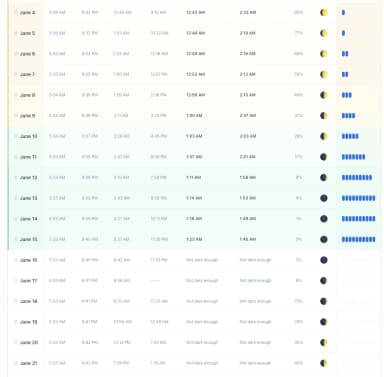
Factor focusing time into your timeline. I check galactic core timing on milkywayplanner.com before a shoot and try to arrive early enough to nail focus before the core reaches its optimal position. Scrambling to find focus while the Milky Way is already where you want it wastes the best minutes of the night.
When Focus Drifts During a Shoot
Even with solid technique, focus problems happen. You bump the lens, the infinity mark was slightly off, atmospheric conditions shift.
I check focus every 10-15 shots by zooming in on the LCD and looking at the stars. If they look soft, I refocus before continuing. It's much better to catch it early than to get home and find an hour of soft frames.
One last note: cold conditions can also shift lens focus as the glass contracts. If you set infinity focus during warmer daytime conditions, it might drift slightly as temperatures drop after sunset. It's worth checking periodically through the night, not just at the start.