Eclipse Photography Planning
Plan eclipse photography years ahead. Learn optimal locations, equipment needs, and timing strategies for both solar and lunar events.
Eclipse photography takes years of planning, not hours. Most photographers wait until eclipse news hits social media to scramble for locations. That approach fails.
Solar eclipses follow an 18-year, 11-day pattern called the Saros cycle. Photograph a total solar eclipse today, and you'll wait nearly two decades for the next one in roughly the same location. Lunar eclipses happen about twice yearly somewhere on Earth and are visible from anywhere on Earth's night side. This difference shapes your entire planning strategy.
Planning for Solar Eclipses
Total solar eclipses require travel. The path of totality rarely exceeds 200 miles wide, creating a narrow corridor where photographers compete for prime locations. Your planning needs to start 2-5 years ahead, minimum.
Start with NASA's eclipse prediction maps. These show exact paths, timing, and duration for decades ahead. The April 8, 2024 eclipse crossing North America offered 4 minutes and 28 seconds of totality in parts of Mexico. That's nearly double the 2017 eclipse duration. The next total solar eclipse visible from the continental United States won't arrive until 2044.
Weather statistics matter more than scenic beauty when scouting locations. Cleveland might offer stunning lake foregrounds, but April weather patterns show 70% cloud probability. Texas locations along the same eclipse path drop to 40-50% cloud cover historically.
Eclipse duration varies along the path. A location offering 3 minutes and 45 seconds of totality provides more shooting opportunities than one with 2 minutes and 20 seconds. Those extra 85 seconds allow for multiple exposure sequences, composition changes, and the mental space to experience the event while photographing it.
Test your equipment months before the eclipse. Solar filters require careful inspection. Any tiny pinholes can damage your sensor or your eyes. Practice your exposure sequences on the regular sun. Know exactly how to switch from filtered pre-totality shots to unfiltered corona photography when totality begins.
Most photographers underestimate the speed of the event. Totality approaches at roughly 1,500 mph. The temperature drops 10-15 degrees Fahrenheit in minutes. Camera batteries perform differently in sudden temperature changes. Your planned exposures mean nothing if equipment fails during those precious minutes of totality.
Lunar Eclipse Opportunities
Lunar eclipses offer completely different planning opportunities. They're visible from anywhere on Earth's night side, so you can focus on composition and technique rather than chasing geography.
The eclipse timeline spans hours instead of minutes. Partial eclipse phases last roughly an hour on each side of totality, with totality itself lasting up to 107 minutes in optimal conditions. This extended timeframe allows for creative approaches impossible during solar eclipses.
Plan lunar eclipse photography around landscape integration. An eclipsed moon rising over recognizable landmarks creates images impossible to capture any other way. The deep red color during totality contrasts well with blue hour skies or city lights.
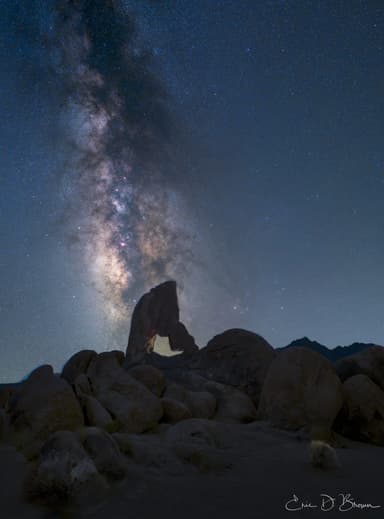
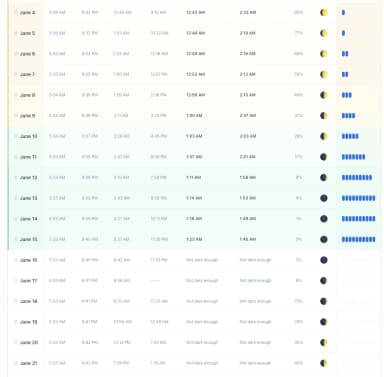
Lunar eclipses allow for wide-field compositions including Milky Way elements. During totality, the dramatically dimmed moon no longer overwhelms fainter stars. Use the Moon Planner to track lunar phases and timing for your location. Plan shoots that capture both the eclipsed moon and galactic core during favorable alignment periods.
Timing becomes more flexible but requires different considerations. Moonrise timing varies by location and date. An eclipse beginning before moonrise in your location means missed opportunities. Plan for eclipses where totality occurs when the moon is well-positioned for your intended composition.
Technical Preparation
Solar eclipse photography demands specific technical preparation. Exposure changes happen rapidly during the transition to totality. Plan exposure sequences that account for the 10-stop difference between the filtered sun and the corona during totality.
Bracketing becomes essential. The corona's dynamic range spans multiple stops from the inner corona's brightness to the outer corona's whisper-thin extensions. Plan HDR sequences that capture this full range while staying within your totality time budget.
Lunar eclipses allow more experimental approaches. The moon's brightness changes gradually over hours rather than seconds. Try time-lapse sequences showing the Earth's shadow progression across the lunar surface. Multiple exposures in single frames can show the eclipse progression artistically.
Focal length planning matters differently for each eclipse type. Solar eclipses benefit from longer focal lengths—400-600mm minimum for detailed corona structure. Lunar eclipses work well with a broader range, from 85mm for landscape integration to 600mm+ for detailed surface features during partial phases.
Weather Research
Eclipse weather research requires historical data analysis rather than short-term forecasts. Look at climatological averages for your target dates and locations spanning decades, not days.
Coastal locations often show different weather patterns than inland areas during the same eclipse. Ocean temperatures moderate cloud formation, but marine layers can create low-altitude clouds that don't form over inland locations.
Elevation considerations affect both weather and atmospheric clarity. Higher-altitude locations typically offer clearer skies but may be less accessible during eclipse events, when thousands of photographers converge on small areas.
Research backup locations within the eclipse path. Traffic and crowds can make primary locations inaccessible. Have secondary and tertiary locations mapped, with driving times calculated for eclipse-day logistics.
Building Your Eclipse Calendar
Start by identifying all solar and lunar eclipses visible from regions you're willing to travel to over the next decade. Cross-reference these dates with your personal schedule. Eclipse photography often requires extensive travel and may require taking time off work.
Prioritize eclipses by duration, weather conditions, and accessibility. A 4-minute eclipse in an easily accessible location with good weather prospects outweighs a 6-minute eclipse requiring complex international travel to regions with poor weather statistics.
Consider eclipse photography as part of broader travel plans. Combining eclipse trips with other astrophotography opportunities maximizes travel investments. Check the annual Milky Way calendar to find overlapping shooting windows near your eclipse destination. A solar eclipse trip to Chile might include dark sky photography in the Atacama Desert.
Budget planning needs to account for price inflation in eclipse tourism. Hotels and transportation costs spike dramatically in eclipse zones. Book accommodations 1-2 years ahead, or plan camping alternatives in areas where eclipse crowds overwhelm commercial lodging.
Plan your eclipse photography calendar with the same strategic thinking you apply to Milky Way season planning. Just as galactic core visibility follows predictable patterns throughout the year, eclipse opportunities follow their own celestial clockwork. The cycles are just much longer and reward patient, methodical planning.
The photographers who capture exceptional eclipse images are not just technically skilled. They're the ones who started planning when others were still deciding whether eclipses were worth the effort.