Milky Way Season 2026
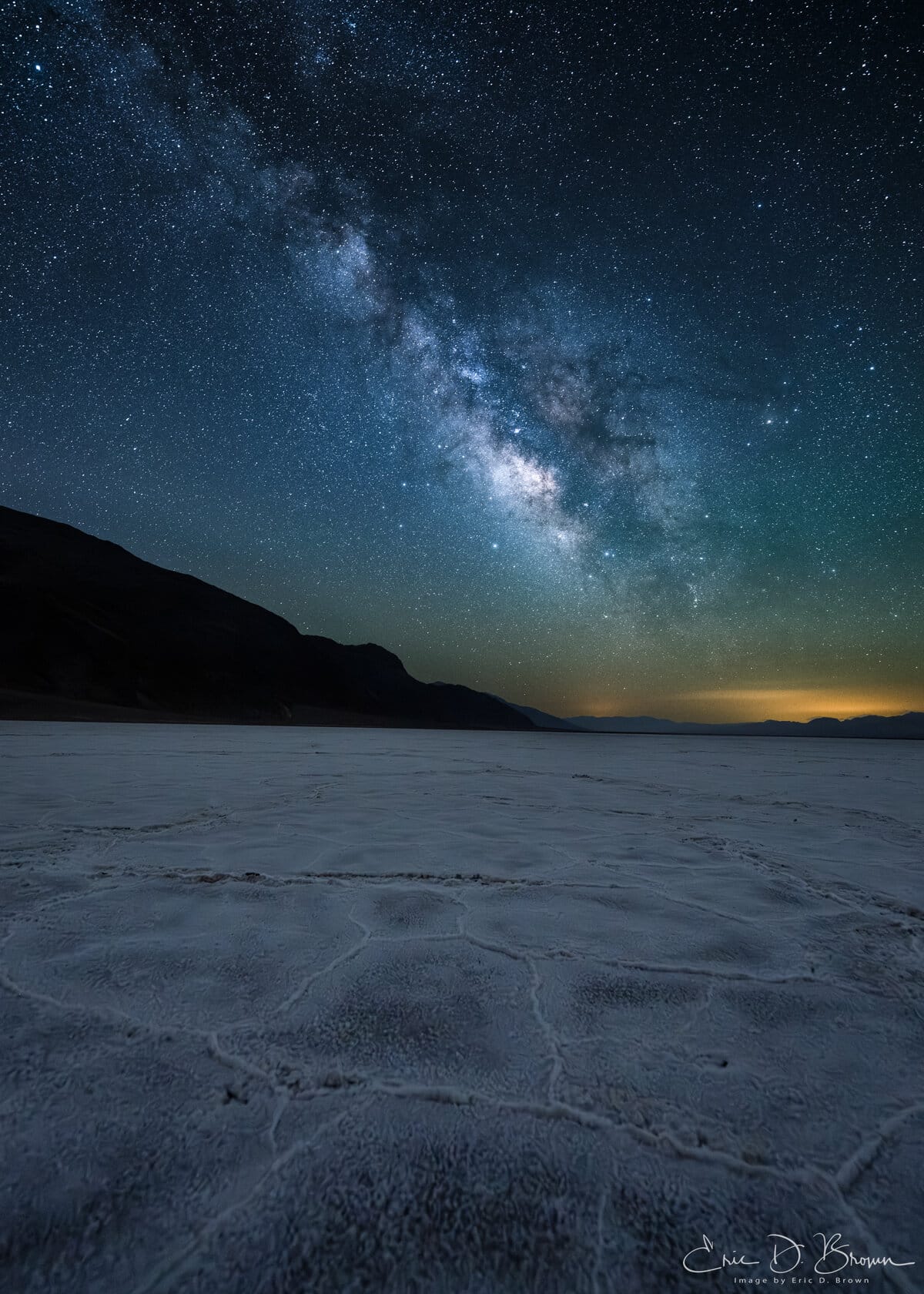
Milky Way season 2026 is the window when the galactic core is above the horizon in darkness long enough to plan around, and those months shift with latitude. A photographer in southern Utah and someone near 50°N do not get the same season.
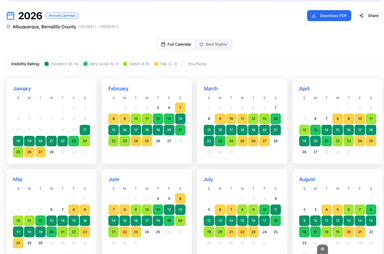
This guide covers the 2026 season phases, visibility by latitude, new moon windows, and how to use the 2026 Milky Way calendar (https://www.milkywayplanner.com/milky-way-calendar/2026) and the free planner so you pick nights that match your location instead of a one-size calendar.
When Is Milky Way Season in 2026?
Milky Way season runs March through October in the Northern Hemisphere, but that range is misleading if you don't think about what "visible" actually means at different points in the season.
In early March, the galactic core rises in the southeast just before dawn. You get maybe an hour of visibility before twilight washes it out. By June, the core is overhead around midnight and you have five or six hours of shooting time. By October, it's setting in the southwest during early evening, and then it's gone until next spring.
So "Milky Way season" is really three phases: early season (pre-dawn only, short windows), peak season (core overhead at a reasonable hour, long dark nights), and late season (evening only, shrinking fast). Our lesson on Milky Way photography by season goes deeper into what changes across these phases. Most photographers focus on the peak during May through August, but the shoulder months are worth planning around too, especially if you're at a lower latitude.
How Does Your Latitude Change Milky Way Visibility?
Latitude matters more than most photographers account for when they're planning a season. The galactic core sits at about -29 degrees declination, which means it's always in the southern part of your sky if you're in the Northern Hemisphere. The farther south you are, the higher it gets, and the longer it's visible each night.
Here's what that looks like in practice:
| Latitude | Example Locations | Season | Core Peak Elevation | Hours/Night (Peak) |
|---|---|---|---|---|
| 25°N | Hawaii, South Texas, South Florida | Feb – Oct | ~65° | 7-8 hours |
| 35°N | Los Angeles, Phoenix, Atlanta | Mar – Oct | ~55° | 6-7 hours |
| 40°N | New York, Denver, Salt Lake City | Mar – Oct | ~50° | 5-6 hours |
| 45°N | Portland, Minneapolis, Montreal | Apr – Sep | ~45° | 4-5 hours |
| 50°N | London, Vancouver, Prague | Apr – Sep | ~40° | 3-4 hours |
A few things jump out from that table.
At 25°N, you get nearly twice the shooting hours per night and a season that's two months longer than what someone at 50°N gets. If you're in Hawaii or southern Mexico, the core passes almost directly overhead in July. That's a fundamentally different experience than trying to shoot it from London, where it never gets above 40 degrees and you lose several weeks around the solstice because astronomical twilight never fully ends.
If you're at 45-50°N, pay attention to this: around the summer solstice, the sky doesn't get fully dark. The core might be in a great position, but the background sky brightness kills contrast. Your practical peak is actually late July through mid-September — the core is still well-positioned, but the nights are long enough to give you true darkness. Plan accordingly.
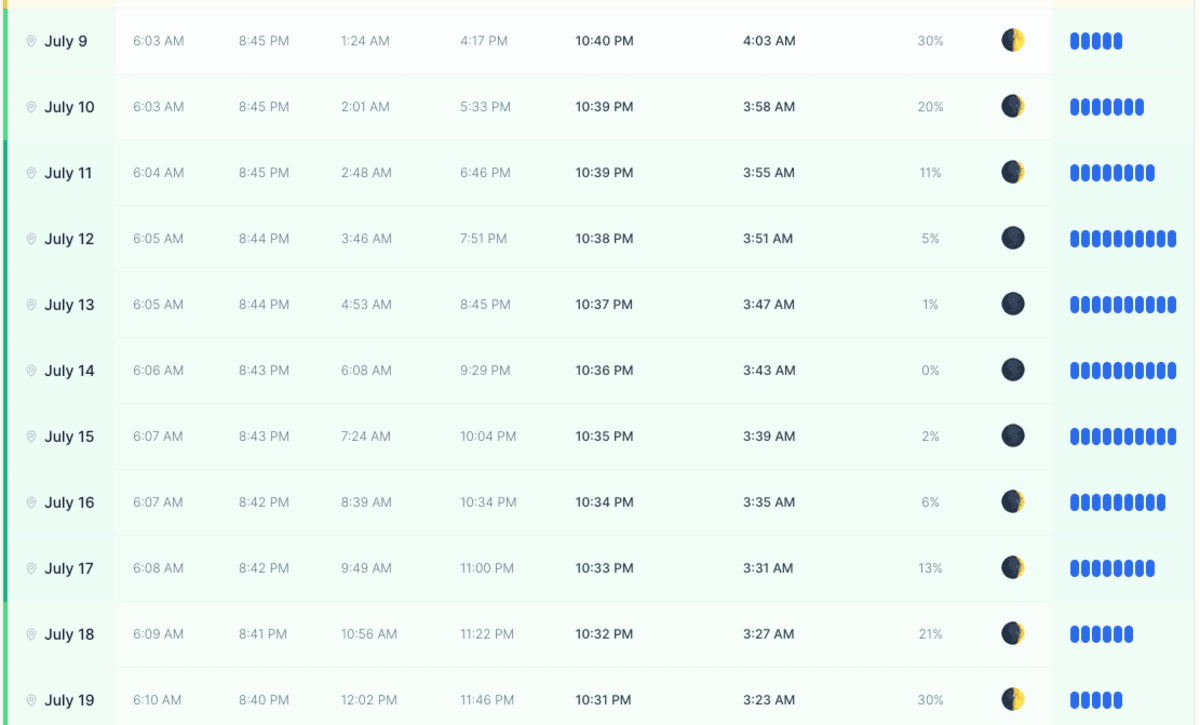
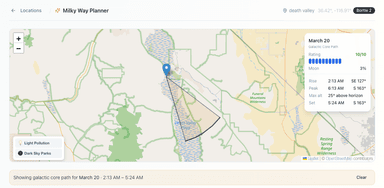
You can check the exact core rise and set times for your specific location on milkywayplanner.com; it calculates by coordinates, not just latitude bands, so you'll get precise windows for wherever you plan to shoot.
2026 New Moon Dates for Milky Way Photography
Moon phase is the single biggest variable in your planning. A perfectly positioned galactic core means nothing if a 90% gibbous moon is flooding the sky with light. Every serious astrophotographer plans around new moon windows — roughly five days centered on each new moon where the sky is dark enough for good Milky Way shots.
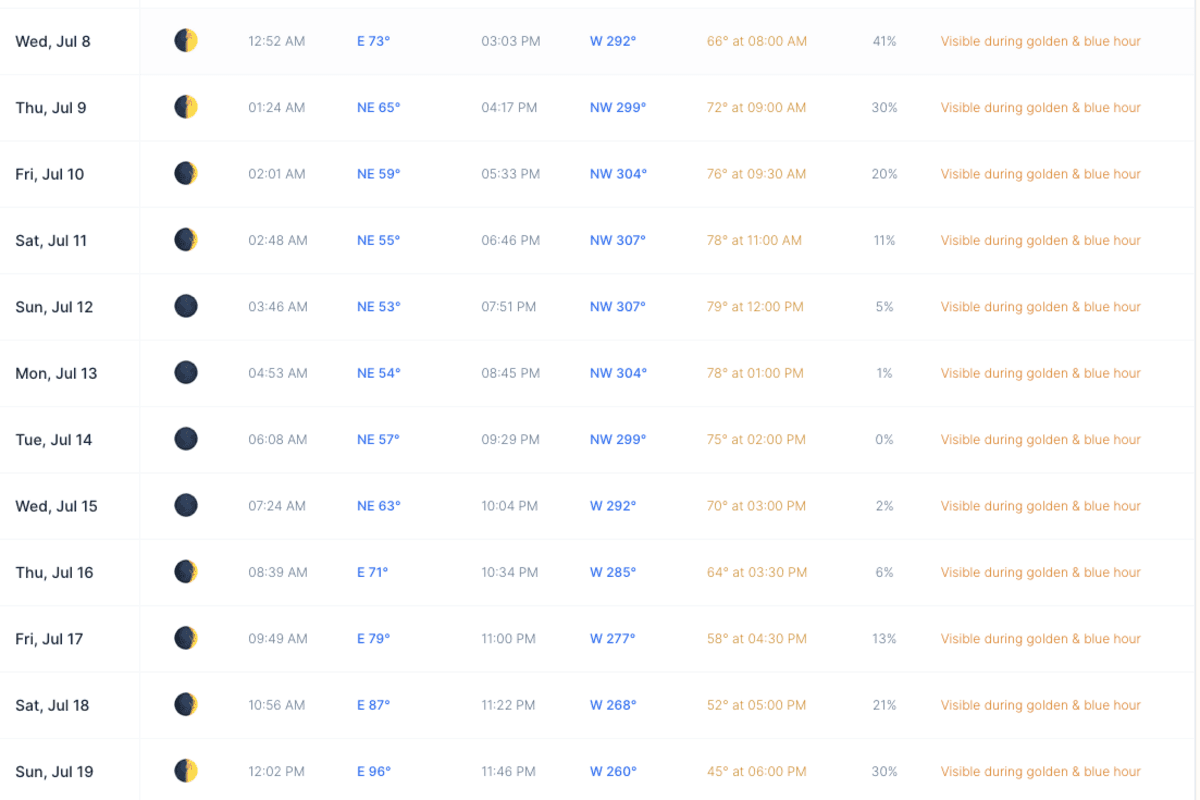
Here are your windows for 2026:
| Month | New Moon | Best Dark Sky Window |
|---|---|---|
| March | March 19 | Mar 17 – 21 |
| April | April 17 | Apr 15 – 19 |
| May | May 16 | May 14 – 18 |
| June | June 15 | Jun 13 – 17 |
| July | July 14 | Jul 12 – 16 |
| August | August 12 | Aug 10 – 14 |
| September | September 11 | Sep 9 – 13 |
| October | October 10 | Oct 8 – 12 |
If I had to pick the top three windows for a trip:
July 12-16 is strong across the board when the core is near peak elevation, summer weather is generally cooperative, and the nights are getting longer again after the solstice (important at higher latitudes).
May 14-18 is underrated. The core is already well-positioned by midnight, spring skies can be exceptionally transparent, and you beat the summer crowds at popular dark sky sites.
And then there's August.
The One Night You Can't Miss: August 12, 2026
August 12, 2026 is the date I keep coming back to. Three things line up on the same night, and that combination is rare enough that it's worth planning around.
First, it's a new moon. Zero lunar interference.
Second, it's the peak of the Perseid meteor shower; the most reliable and prolific meteor shower of the year, with rates around 100 meteors per hour under good conditions. The Perseids radiant rises in the northeast while the Milky Way core sits in the southwest, which means you can potentially capture both in a wide-angle panorama.
Third — and this is the one that makes it unusual — there's a total solar eclipse earlier that day. The path of totality crosses Greenland, Iceland, and northern Spain (A Coruna, Bilbao, Valencia). If you're in Spain or Iceland for the eclipse, you can watch totality during the day, then shoot Perseids under a moonless sky with the Milky Way that same night.
Even if you're not chasing the eclipse, the August new moon window is the strongest of the year for combining meteor shower photography with Milky Way shooting. Book your dark sky lodging early because once word gets around about this convergence, the popular spots will fill up.
What Meteor Showers Overlap with Milky Way Season in 2026?
Besides the Perseids, two other meteor showers overlap with Milky Way season:
Lyrids (April 21-22): Good conditions in 2026. The moon is a 27% waxing crescent that sets before midnight, leaving the pre-dawn hours dark for both meteors and the rising galactic core. Rates are modest (~18/hour), but it's a nice bonus if you're already out shooting.
Eta Aquariids (May 5-6): Skip it for photography in 2026. An 84% waning gibbous moon is up through the best viewing hours. You'll maybe see a handful of meteors through the glare, but it's not worth planning a trip around.
Venus-Jupiter conjunction (June 9): Not a meteor shower, but worth noting. Venus and Jupiter will be within about 1.6 degrees of each other in the west-northwest after sunset, both extremely bright. If you're set up for a Milky Way session during the June new moon window, you'll have a striking planetary pair low on the horizon as a foreground element before the core climbs higher.
Start Planning Your 2026 Milky Way Season Now
The core is already up and the new moon dates are fixed. The only variable is whether you block the time and pick your locations, or get to September and realize the season went by.
A few concrete things you can do this week:
- Pick two or three new moon windows from the table above that work with your schedule. Put them on your calendar now.
- Scout locations during the day. Drive out to a dark sky site on a weekend afternoon. Walk the terrain. Find foreground elements — rocks, trees, water, structures — and figure out where the core will be relative to them on your target dates.
- Check your latitude. If you're above 45°N, don't assume June is your best month — late July and August might give you better results because the nights are actually dark.
- Watch August 12. Whether you're planning a trip to Spain for the eclipse or just heading to your favorite dark sky spot, that Perseid + new moon combination is rare. The last time Perseids peaked on a new moon was 2018.
You can plug your location into milkywayplanner.com to see exactly when the core rises and sets on any date. It takes about 30 seconds to map out your entire season. The best shots I've taken came down to being in the right place at the right time with the right moon phase, right core position, right location. Getting that right is mostly a planning problem, and the data's there if you go looking for it.