Planning Milky Way Shots 2 Years Ahead: Iceland Case Study

How detailed advance planning turned a 2022 idea into perfect 2024 shots at Iceland's Vestrahorn. Real timeline, tools, and lessons learned.
Sarah had never been to Iceland when she started planning her Vestrahorn Milky Way shoot in March 2022.
Her target date: August 2024. Twenty-nine months to get everything right.
This might sound excessive, but Sarah's methodical approach paid off. She captured the shots she envisioned, avoided common tourist traps, and saved thousands on flights and accommodations. More importantly, she understood exactly what conditions to expect when she arrived.
Here's how she did it, and what you can learn from her process.
Why Two Years? The Real Benefits
Most photographers plan Milky Way shoots weeks or months ahead. Sarah chose two years for several practical reasons:
- Flight costs drop significantly when booked 12-18 months in advance. Sarah paid $420 roundtrip from Denver to Reykjavik. The same flights cost $1260 six months before departure.
- Accommodation selection improves dramatically. Iceland's best photography lodges book solid during Milky Way season. Sarah secured a room at the Fosshotel Glacier Lagoon—perfectly positioned for Vestrahorn access—when most photographers were scrambling for expensive last-minute options.
- Weather pattern understanding develops over time. Sarah tracked Vestrahorn's weather data for eighteen months before her trip. She learned that late August typically offers three clear nights per week, with fog rolling in after midnight on humid days.
But the biggest advantage thought was mental preparation. Sarah arrived knowing exactly where to position her tripod, which compositions worked best, and how the Milky Way would align with the mountain across different dates.
The Planning Timeline: Month by Month
Months 1-3: Foundation Research
Sarah started with basic questions: When is the Milky Way visible from Iceland? What's the weather like in different seasons? Which locations offer the best compositions? She discovered that Iceland's Milky Way season runs from mid-April through September, with peak galactic center visibility in July and August. At 64°N, Iceland's latitude dramatically affects the shooting window. August offered the best compromise between dark skies and reasonable weather.
Key insight: Don't rush this phase. Sarah spent a few months just understanding Iceland's geography and seasonal patterns before choosing specific dates.
Months 4-8: Location and Date Selection
Sarah narrowed her focus to three locations: Vestrahorn, Kirkjufell, and Jokulsarlon. She used satellite imagery to study compositions and read trip reports from other photographers. Vestrahorn won for several reasons: fewer crowds than Kirkjufell, better foreground options than Jokulsarlon, and consistent access regardless of weather conditions.
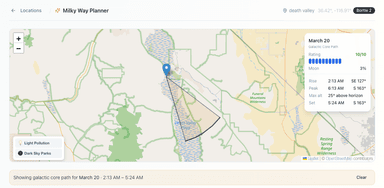
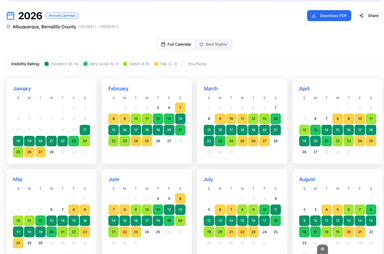
For dates, Sarah used our website (milkywayplanner.com) to identify the best dates in August for shooting the Milky Way near Vestrahorn. She found three optimal windows in August 2024: the 12th-14th, 19th-21st, and 26th-28th.
Key insight: Book multiple potential dates if possible. Sarah reserved accommodations for all three windows, canceling two as her departure approached.
Months 9-15: Deep Weather Analysis
This phase separated Sarah's preparation from typical trip planning.
Instead of checking weather forecasts (useless 15 months out), she analyzed historical patterns. She learned that the August weather in southeastern Iceland follows predictable cycles. High-pressure systems typically last 3-4 days, followed by 2-3 days of unsettled conditions. Fog becomes more common after August 20th as ocean temperatures drop.
Sarah also discovered that Vestrahorn creates its own microclimate. The mountain blocks western storms but can trap morning fog. Clear skies often appear first on the mountain's eastern side.
Key insight: Historical weather data matters more than long-range forecasts. Patterns repeat; specific predictions don't work months ahead.
Months 16-20: Equipment and Logistics
With location and timing set, Sarah next focused on practical details.
She researched camera settings for Iceland's unique conditions (bright nights in summer), studied tidal patterns at Vestrahorn's beach, and planned backup activities for cloudy nights. She also started tracking flight prices and rental car availability. August is peak season in Iceland; waiting until the last minute often results in higher costs and fewer options.
Key insight: Book refundable reservations early, then monitor for better deals. Sarah rebooked her rental car three times as prices fluctuated.
Months 21-24: Fine-tuning and Preparation
Sarah's final months focused on details that would matter on location. She studied moon phases to understand how lunar light would affect her compositions. She researched tide schedules to know when Vestrahorn's beach would offer the best reflections. She also connected with local photographers through online forums. These contacts provided current conditions updates and suggested compositions she hadn't considered.
Key insight: Local knowledge beats any amount of online research. Sarah's contacts helped her avoid a construction zone that would have blocked her planned shooting location.
The Execution: August 2024
Sarah's preparation paid off.
She arrived in Iceland knowing exactly where to go and what to expect. While other photographers struggled with unfamiliar locations and equipment issues, Sarah focused on capturing the images she'd envisioned. Her weather tracking proved accurate. The first two nights offered clear skies, exactly as historical patterns suggested. Fog rolled in on night three, but Sarah was ready with indoor backup plans. The shots exceeded her expectations. More importantly, the trip felt relaxed and purposeful rather than rushed and chaotic.
Tools That Made the Difference
Several resources proved essential for Sarah's planning: Historical weather data from Iceland's meteorological service helped identify reliable patterns. This data spans decades and reveals trends that are invisible in shorter timeframes. Milkywayplanner.com provided the best dates and times for shooting the Milky Way. Tide charts and moon phase calculators helped plan specific shooting times. These factors change predictably, making advance planning both possible and valuable. Photography forums and social media groups connected Sarah with photographers who knew the area. These relationships provided real-time updates and practical advice.
Lessons for Your Own Planning
Sarah's approach works for any long-term Milky Way project.
The key principles apply whether you're planning six months or three years. For a full breakdown of essential planning tools, see our dedicated guide, and our lesson on multi-night trip planning walks through the logistics of extended shoots. Here are the basics:
- Start with broad research, then narrow your focus.
- Understand regional patterns before choosing specific dates and locations.
- Track costs over time. Prices fluctuate, and early booking often (but not always) saves money.
- Build relationships with local photographers. Their knowledge supplements any amount of online research.
- Plan for weather uncertainty. Historical patterns help, but always have backup options.
- Document your planning process. Sarah kept detailed notes that helped her refine future trips.
The photographers who consistently capture great Milky Way images aren't necessarily more talented or better equipped. They're better prepared. Two years might seem excessive, but the results speak for themselves.
Your next great Milky Way shot might start with planning today.