How to Plan Perfect Circular Star Trails: Location, Timing, and Technique
Master circular star trail photography with proper planning, location scouting, and timing strategies for dramatic concentric circles around Polaris.
My first time out shooting star trails a few years ago, I spent three hours watching my camera create wonky, off-center star trail arcs because I didn't plan where Polaris would sit in my composition. What I wanted was perfect circular star trails spinning around a central point. What I got was a mess that looked like I'd randomly pointed my camera north and hoped for the best (which is actually what I did).
After shooting star trails for a few years now, I've learned that planning matters more than the gear you bring. You can have the most expensive camera setup in the world, but if you don't know where the North Star sits relative to your foreground, you're gambling with 3-4 hours of shooting time.
The difference between nailing circular star trail shots and ending up with unusable arcs comes down to understanding one simple fact: every star in the northern hemisphere appears to rotate around Polaris, and you need to position that rotation exactly where you want it in your composition.
Where Do You Want Your Circular Star Trails Centered?
Every star traces a circle around Polaris as the Earth rotates. Polaris sits almost exactly on the celestial north pole (about 0.7 degrees off, but close enough for photography). This means Polaris becomes the center point of your circular composition. Stars closer to Polaris make smaller circles. Stars farther away trace larger arcs across your frame.
Most photographers assume star trails "just happen" if you point north and leave the shutter open. But positioning Polaris exactly where you want the center of those circles requires planning. Want trails spinning around a mountain peak? Put Polaris right above that peak. Want them centered over a lake reflection? Position Polaris there.
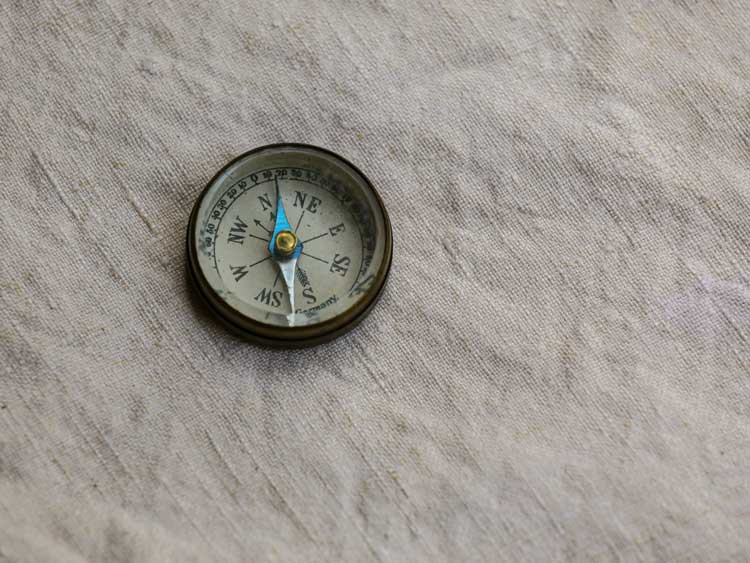
The first step in any star trail shoot is finding Polaris during your daytime scout. Use a compass or smartphone app to identify true north. At night, use the Big Dipper and draw a line through the two stars at the end of the dipper's cup, extend it about five times that distance, and you'll hit Polaris.
I always scout during daylight now. I've driven for hours to locations, hiked in the dark, set up my gear, only to realize Polaris would be behind a tree or entirely outside my frame. Now I plan the exact positioning during the day.
Scouting Your Composition for Star Trail Photography
You need to decide where you want the center of your circular star trails, then work backward to position your camera. Polaris dead center gives you perfectly concentric circles filling your frame. Polaris, positioned above a ridgeline, creates trails that arc over mountains. For reflection shots, consider how the trails will look both in the sky and mirrored in water.
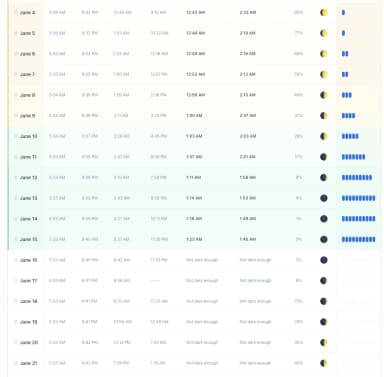
I use the planner here at Milky Way Planner to check sunrise and sunset times while planning a trip. Since you'll want to start shooting well after astronomical twilight ends. You can also verify moon phases in the premium version of the site.
One thing I learned the hard way: consider the entire rotation through your shooting window. If you're planning a 2-hour exposure, Polaris stays put, but everything else moves significantly. That mountain peak might look perfect with Polaris above it at the start, but check where other prominent stars will be by the end. The Big Dipper makes a substantial arc in two hours.
Location scouting focuses on interesting foreground elements that work with circular compositions:
- Lone trees or distinctive rock formations
- Mountain peaks and ridgelines
- Architectural elements like lighthouses or barns
- Water features for reflected star trail effects
When Should You Shoot Circular Star Trails?
Star trail photography needs several hours of complete darkness. In summer, this means a very late start and early finish. Winter gives you longer nights but harsher conditions.
Moon phase planning differs from Milky Way work. While galactic core shooting demands new moon darkness, circular star trails can benefit from some moonlight. A crescent or quarter moon provides enough illumination to define your foreground without overwhelming the star movement. I've had success shooting with moon phases up to about 30-40% illumination.
Plan when the moon rises or sets during your shooting window. For pure star trails against a dark sky, keep the moon below the horizon for most of your exposure. For foreground illumination, plan for the moon to be visible during part of your shooting time.
Weather follows the same principles as other astrophotography: clear skies and stable atmospheric conditions. But star trails offer more flexibility since you're not capturing faint galactic detail. Light high clouds won't kill a star trail image the way they would a Milky Way shot, and may even add some additional image value.
Wind is actually more of a concern for star trails than for single-frame astrophotography. You're committing to hours of exposure time, and camera shake from wind ruins the entire sequence. Scout for wind-protected positions and bring a sturdy tripod.
Technical Setup for Star Trail Success
I prefer image stacking over single long exposures: dozens or hundreds of shorter exposures combined in post-processing. This approach is easier on your camera sensor, gives you more control in post-processing, and provides backup if something goes wrong partway through. Instead of gambling on one perfect 3-hour exposure, you're taking 180 one-minute exposures that you can blend together. Additionally, you can turn all the frames into a time-lapse capture more easily than with a single long exposure.
For stacking, set your camera to continuous exposures with no gaps between frames. Most cameras have intervalometer functions or use an external timer. I typically shoot 30-second exposures at ISO 400-800, adjusting based on how bright the star trails appear.
Focus is critical and tricky in complete darkness. Use live view and zoom in on a bright star to achieve sharp focus, then tape your focus ring so it doesn't shift during the long session. I usually focus on Polaris since it's the central point of my composition.
Set your intervalometer, start the sequence, and wait. I plan for 90 minutes to 3 hours of total exposure time. Shorter sequences create subtle arcs; longer sequences create complete or near-complete circles.
From a lens selection standpoint, you will want to use a lens that captures the scene in its entirety. Star trails do not really lend themselves well to panoramas, so the wider the better (obviously depending on the location and distance from the subject).
Lens selection for circular star trails:
- Wide-angle lenses (14-24mm): Capture more of the circular trail pattern, work well for foreground-heavy compositions
- Medium focal lengths (35-85mm): Focus on smaller sky sections, create more compressed, intense circular patterns
Planning Makes Perfect Circular Star Trails
After shooting dozens of star-trail sequences, I've learned that planning makes or breaks the shot, not technical execution. You can nail every camera setting perfectly, but poor composition planning or incorrect Polaris positioning will give you technically perfect images that don't work visually.
I spend at least as much time planning and scouting as I do actually shooting. Use daylight hours to identify your exact camera position, check your north bearings, and visualize where the star circles will appear relative to your foreground elements.
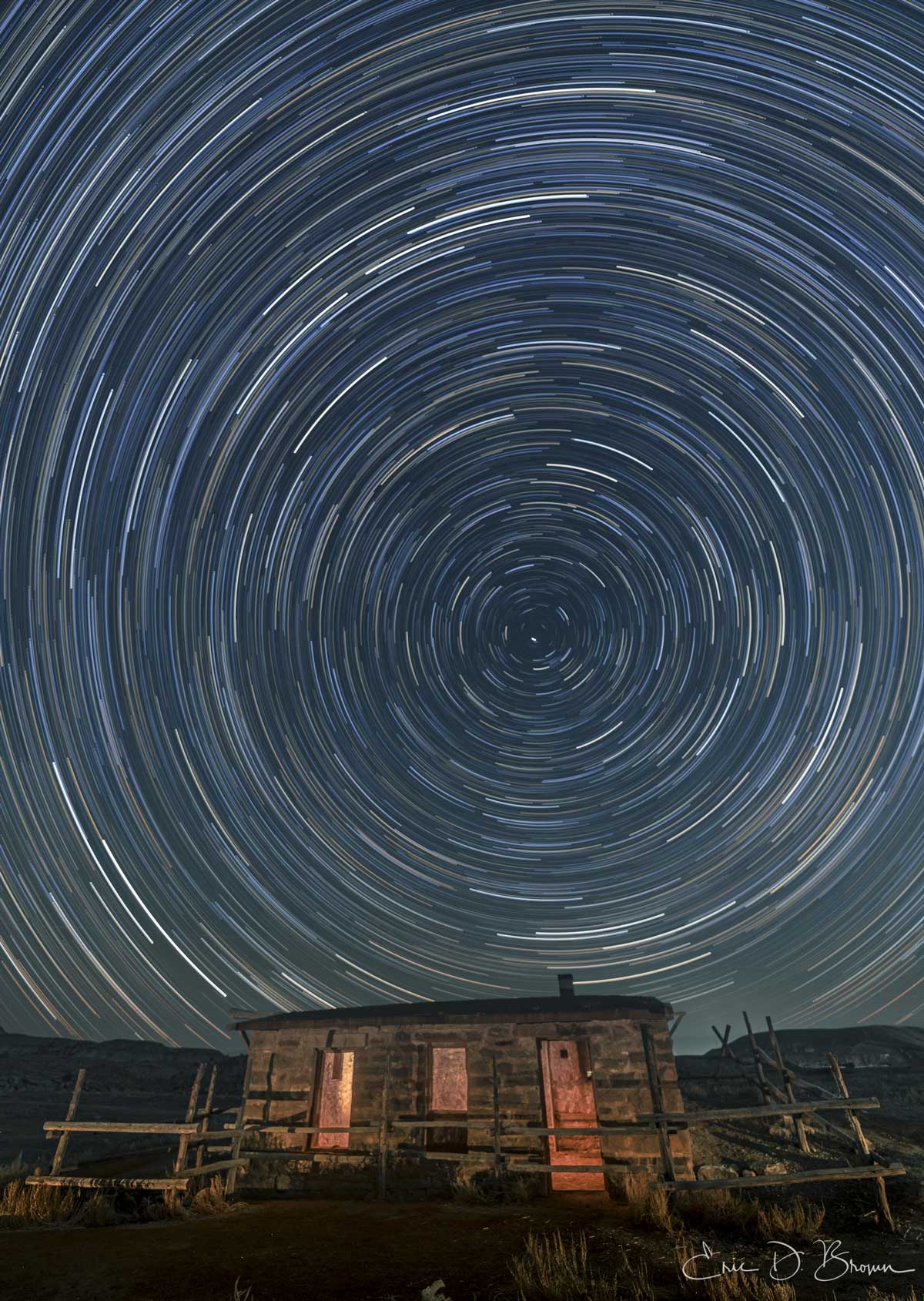
When you nail a perfectly composed circular star-trail image with Polaris positioned exactly where you envisioned it, foreground elements working with the celestial rotation, and trails forming complete circles that draw the eye through your composition, it's one of the most satisfying achievements in astrophotography.
Star-trail photography teaches you to think as the Earth rotates, to visualize celestial mechanics in your compositions, and to plan shoots that unfold over hours rather than moments. It's as much about patience and planning as it is about technical camera work. If you're new to astrophotography, our beginner's guide to capturing the Milky Way covers the fundamentals, and our lesson on planning your first shoot walks through the full planning workflow.