Best Time to Photograph the Milky Way (by Hemisphere and Latitude)
Milky Way season runs on hemisphere and latitude windows. See Northern and Southern ranges, why summer can fail at your latitude, and how to pick rated nights.
I get asked "when is the best time to photograph the Milky Way?" enough that the short answer lives on the milkywayplanner.com FAQ. People usually ask it right before they book travel or put in for PTO, and they want a month they can circle, which is fair enough even though month alone never decided whether I came home with a frame or a story about why the core wasn't up.
The best time to photograph the Milky Way is during galactic core season, when the core is above the horizon in astronomical darkness and the moon is new or near-new. From mid-northern latitudes that season typically runs from late winter through mid-autumn (roughly February through October), with the longest usable windows in late spring and summer; southern latitudes see a longer season. Exact nights depend on your latitude and the moon, so a location-based milky way photography calendar (core timing + moon + darkness) is more useful than a single "best month" for the whole country.
When people say "Milky Way," they usually mean the galactic core toward Sagittarius. The outer arms show up on dark nights year-round. The core doesn't. You need three things at once: core above the horizon in true darkness, moon out of the way (new or near-new, or set for your shoot), and a sky that has reached astronomical darkness with low light pollution. I've driven hours with only two of those three locked in, and the night does not work that way.
Hemisphere sets the rough season, latitude moves the edges, and moon and darkness pick the nights inside it. Peak core season plus a dark moon at your latitude, on a night that actually gets dark, is as close as I've gotten to a rule that survives real trips.
Northern and Southern windows (short)
Mid-northern latitudes: roughly February through October for galactic core season, with November through January usually off for the shots most people mean. South Texas and Portland should not share the same mental calendar. For composition and logistics by season, see Milky Way photography by season. For how latitude moves the edges, see How latitude changes everything about your Milky Way season.
Southern Hemisphere sites get a longer season than most Northern mid-latitudes, often with a strong mid-year stretch and a higher core (Atacama, Namibia, Aoraki Mackenzie), and the same three conditions still apply there. Fuller Southern season detail is for a later guide; use the latitude post when you need more than this hub.
Why peak season and summer charts still fail
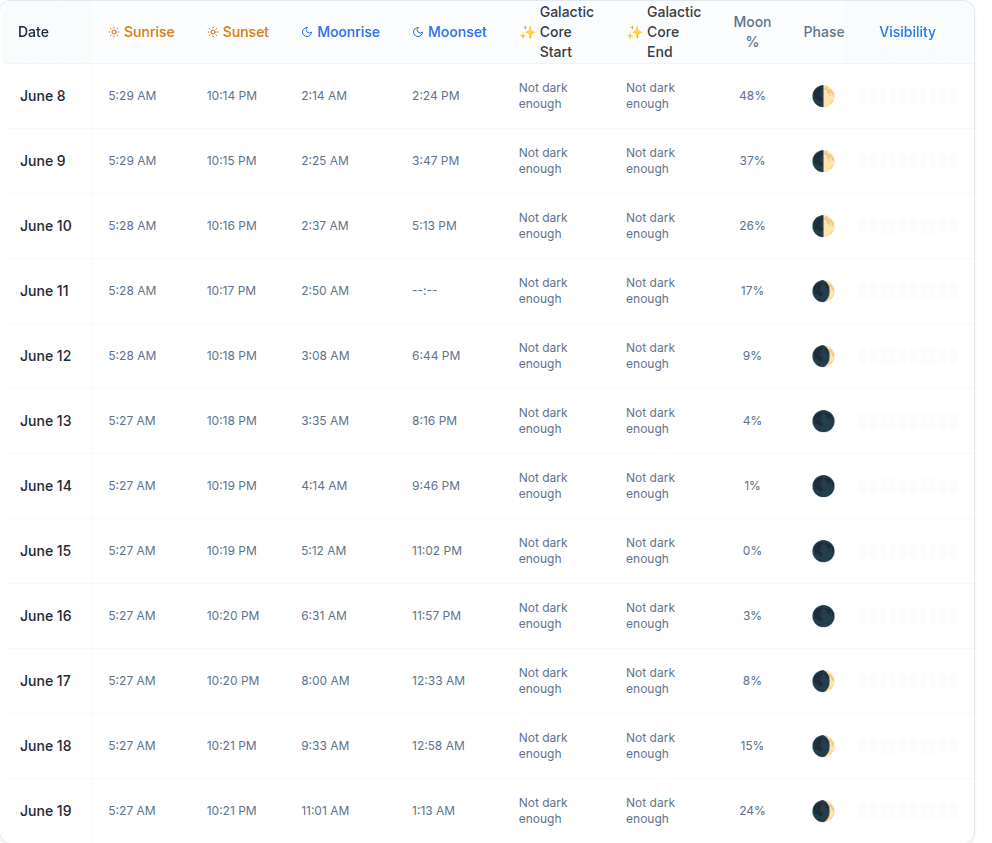
Peak season means the core can be above the horizon in darkness. It does not mean every night in July is good. A bright moon washes out the core. Short summer nights can keep the sky from ever reaching astronomical darkness, especially above about 48.5 degrees N, even when Sagittarius looks "up" on a star chart.
If summer looks empty at your pin, believe the rating. Deeper June pass: Milky Way photography in June by latitude. Pair with the latitude season post. Year-specific moons and dated windows: 2026 season planning guide and 2026 calendar.
How to get your nights
- Open the free planner at milkywayplanner.com. No account needed for a location calendar.
- Set your pin or coordinates for the place you will stand, not the nearest big city.
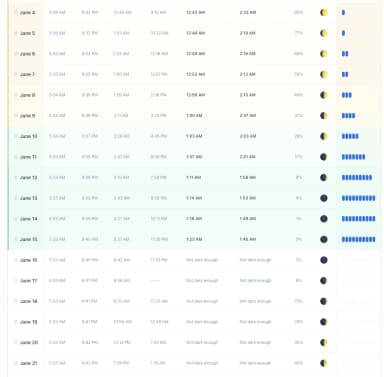
- Read the night-by-night ratings (core timing, moon, darkness). Look for stretches where all three look solid. Mid-latitude peak months should show clusters around the dark moon. High-latitude summer months may look thin or empty even when star charts still show Sagittarius "up."
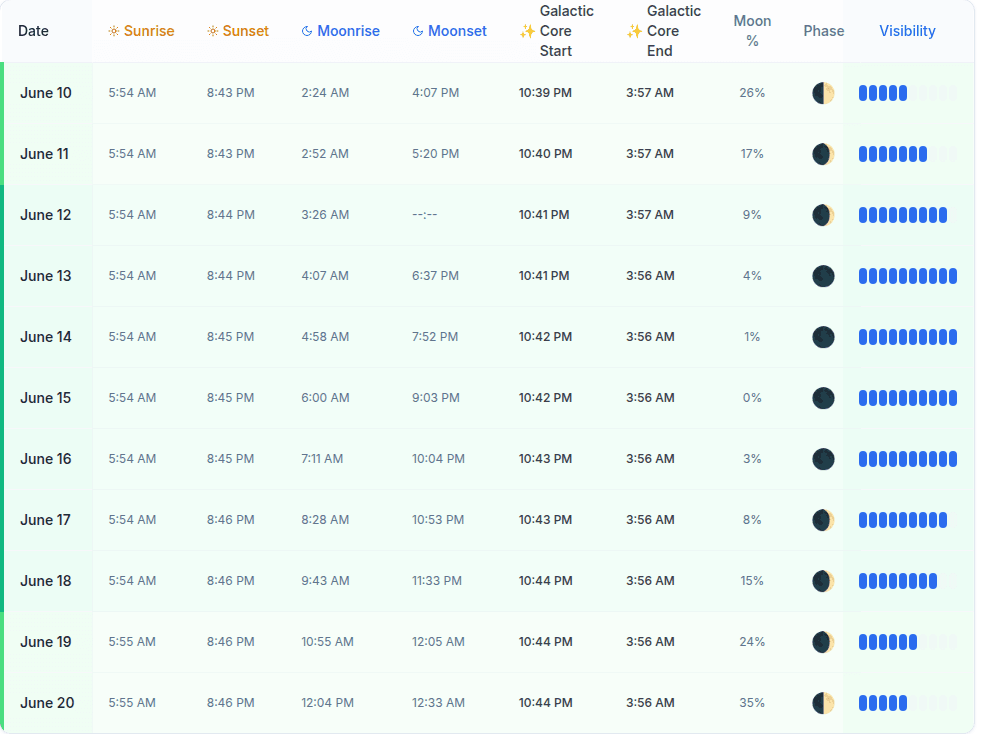
- Pick a dark stretch inside your season, then cross-check dated moons with the 2026 season guide or 2026 calendar.
- Optional: for a worked example turning rated nights into a short trip, see How I plan a 3-day astrophotography trip (Moab).
Short answers
When is the best time to photograph the Milky Way?
During galactic core season, when the core is above the horizon in astronomical darkness and the moon is new or near-new. Mid-northern latitudes run roughly February through October with the longest windows in late spring and summer, and southern latitudes see a longer season, with exact nights depending on latitude and moon.
How do hemisphere and latitude change the season?
Hemisphere sets which months the core is available in darkness. Latitude moves the edges: farther toward the poles generally means a lower core, shorter windows, and more summer nights that never reach true darkness. More: by season · latitude.
Why can summer show no core visibility at some latitudes?
Near the solstice at higher latitudes, the sky may never reach astronomical darkness even when the core is above the horizon. Charts say peak; your pin can still rate thin or empty. More: June by latitude.
What should I do after I know the season window?
Check the exact location in the free planner at milkywayplanner.com so core, moon, and darkness are rated together. Use the 2026 season planning guide for dated moon lists; use this page for the evergreen rule.